
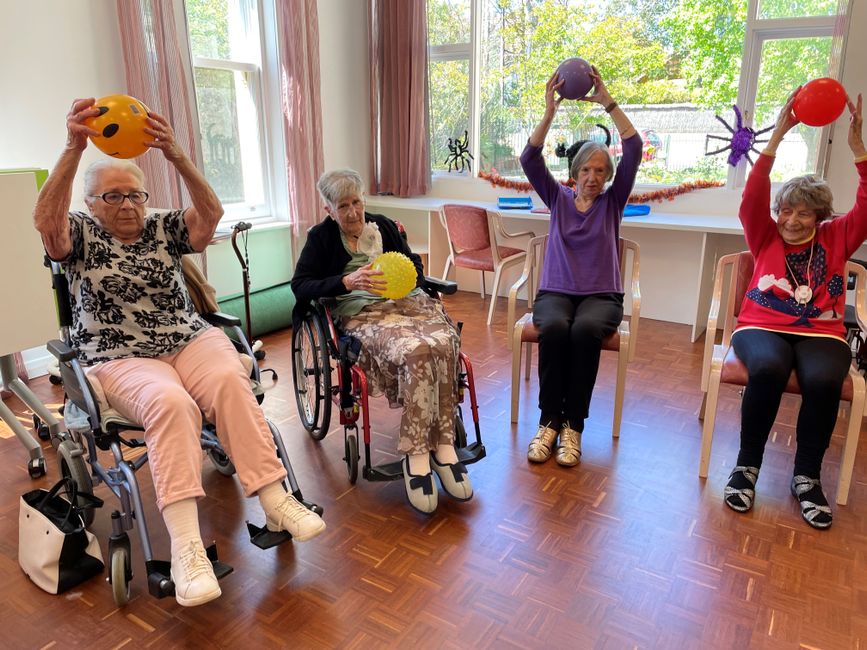
Assisted living activities should support more than entertainment. A well-planned recreation program can help residents stay physically active, maintain routines, connect with others, express personal interests, and continue participating in everyday life.
In Pennsylvania, assisted living residences are expected to provide daily social and recreational opportunities. Residents should also have a meaningful role in shaping the activities offered. The most useful programs recognize that people have different abilities, schedules, cultural backgrounds, hobbies, and comfort levels.
What types of activities are offered in assisted living?
Assisted living communities commonly offer a mix of physical, social, creative, educational, spiritual, and leisure activities. Residents may choose group programs, independent hobbies, or quieter options depending on energy, mobility, and personal preference.
Examples may include:
- Chair exercises, stretching, walking groups, balance practice, or light strength activities
- Arts and crafts, painting, seasonal decorations, knitting, or simple woodworking projects
- Card games, puzzles, trivia, bingo, board games, and memory-focused activities
- Music programs, sing-alongs, dancing, concerts, or opportunities to play an instrument
- Gardening, indoor plants, bird-watching, and nature observation
- Cooking demonstrations, baking projects, or familiar food traditions
- Reading groups, current-events discussions, lectures, and lifelong-learning programs
- Religious services, prayer groups, meditation, or other forms of spiritual support
- Movie afternoons, theater programs, holiday celebrations, and social gatherings
- Visits with family members, volunteers, children, or trained therapy animals
A varied calendar matters because no single activity will appeal to every resident. A person who dislikes group games may enjoy gardening, music, reading, or helping prepare decorations.
Are assisted living activities mandatory?
No. Participation should generally be voluntary. Residents may attend activities every day, choose only certain programs, or prefer independent recreation.
A resident may decline because of fatigue, pain, hearing difficulty, anxiety, illness, religious observance, or simply lack of interest. Staff should offer encouragement without treating nonparticipation as a behavioral problem.
Families sometimes assume that a full activity calendar means every resident is socially engaged. That is not always the case. The quality of a program is better measured by whether residents can find activities that feel worthwhile and accessible, not by the number of events listed.
How can activities be adapted for different abilities?
Activities should be adjusted to the resident rather than expecting every resident to perform in the same way. A person with limited mobility may participate in a gardening activity using raised containers, or join a music program without standing or moving around the room.
Useful adaptations may include:
- Large-print instructions, cards, books, and calendars
- Good lighting and reduced background noise
- Seated versions of exercise, dancing, or games
- Shorter sessions with rest breaks
- Simple steps, visual cues, or hands-on guidance
- Materials that are easy to grip
- Smaller groups for residents who become overwhelmed in large gatherings
- Familiar music, objects, photographs, or conversation topics
- Alternative activities for residents who cannot safely participate in the original format
Residents with memory loss may benefit from predictable routines, familiar songs, sensory activities, and opportunities to use long-practiced skills. An activity does not have to produce a finished project to be successful. Enjoyment, comfort, and participation can be the primary goals.
What should residents ask about the activity calendar?
A calendar can look impressive while still failing to meet an individual’s needs. Residents and families should look beyond the number of events and ask how activities work in practice.
Helpful questions include:
- Are activities offered in the morning, afternoon, and evening?
- Are there options for residents who prefer quiet or independent activities?
- How are activities adapted for wheelchairs, walkers, vision loss, hearing loss, or memory changes?
- Can residents suggest new activities or help plan the calendar?
- Are family members welcome at selected programs?
- Are transportation or outdoor activities available when conditions permit?
- What happens during very hot, cold, rainy, or icy weather?
- Are supplies provided, or are residents expected to bring materials?
- Are activities held in spaces that are easy to reach from resident rooms?
- How are residents informed when a program is changed or canceled?
For someone living in Royersford, seasonal planning may be particularly relevant. Outdoor walks, gardening, patio visits, and community outings may be comfortable during mild weather, while indoor exercise, music, crafts, and discussion groups become more important during winter conditions or periods of heat and heavy rain.
Do activities have to be physically demanding to be beneficial?
No. Recreation can support well-being without being strenuous. Social conversation, listening to music, looking through family photographs, folding laundry for a craft project, or caring for a small plant may all provide purpose and stimulation.
Physical activity still has value when it is safe and suited to the resident. Even brief movement can help break up long periods of sitting. However, recreation should not be treated as a substitute for individualized medical care, physical therapy, or clinical treatment.
The most appropriate level of activity depends on a resident’s health, balance, endurance, medications, and personal goals. Any program involving exercise, outdoor conditions, or equipment should include reasonable safety precautions.
How do activities help with loneliness and adjustment?
Moving into assisted living can change a person’s routines, privacy, transportation, and daily social contacts. Activities create natural opportunities to meet people without requiring residents to begin a conversation from the beginning.
Small, repeated interactions are often more comfortable than large social events. Eating with the same group, attending a weekly card game, joining a walking routine, or helping water plants can gradually create familiarity.
Families can support this adjustment by asking about specific activities rather than simply asking whether a loved one is “social.” More useful questions include:
- Did any activity make the day easier?
- Was there someone you enjoyed talking with?
- Would a smaller group feel more comfortable?
- Is there an activity from home that could be continued?
- Were there barriers such as noise, fatigue, transportation, or difficulty seeing materials?
What if a resident says there is nothing interesting to do?
This complaint should be taken seriously. It may mean the program does not reflect the resident’s interests, or it may point to barriers such as depression, pain, hearing loss, poor sleep, cognitive changes, or difficulty getting to the activity space.
A resident may have enjoyed woodworking, farm work, dancing, sewing, sports, cooking, teaching, church groups, or neighborhood volunteering for decades. Those interests can provide clues for creating meaningful alternatives, even if the original activity is no longer practical.
The goal is not to keep every resident busy every hour. The goal is to provide accessible choices that respect independence, support relationships, encourage safe movement, and preserve a sense of identity.
How can families stay involved in recreation?
Family members can contribute by sharing information about a resident’s past interests, favorite music, important traditions, and preferred conversation topics. They may also join selected activities, bring photographs or familiar materials, take a walk together, or help continue a hobby in an adapted form.
A strong recreation program remains flexible. It recognizes that residents may want companionship one day and privacy the next, and that interests can change with health, mood, weather, and life circumstances.
